Industrial Vehicle Glass Solutions India: Construction Equipment, Mining & Agriculture Glass
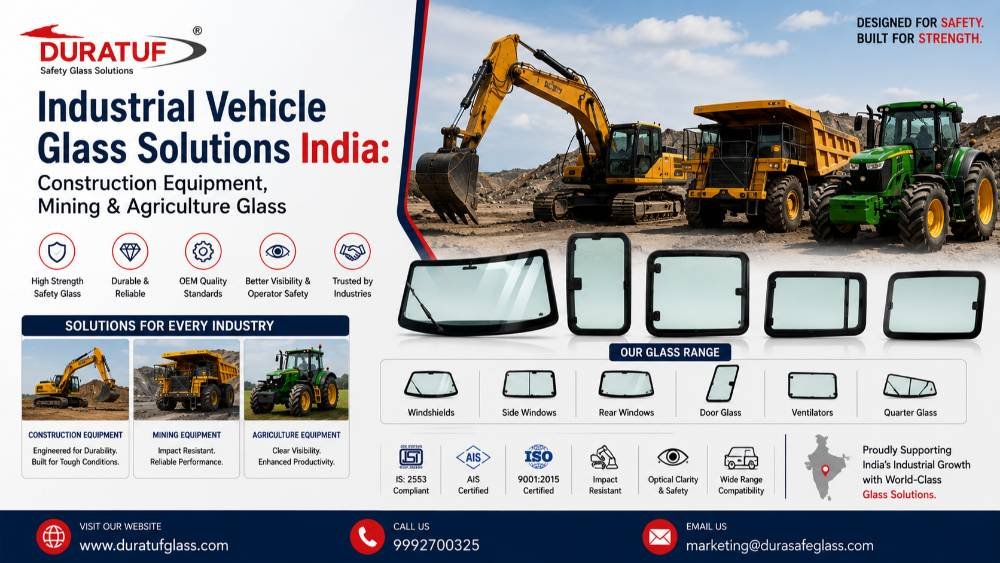
India’s infrastructure and industrial sectors are undergoing a massive transformation. From massive construction projects and expanding mining operations to modernizing agriculture, heavy machinery forms the backbone of the nation’s growth story. And at the heart of every bulldozer, excavator, mining truck, and combine harvester lies a critical component that ensures operator safety, visibility, and comfort—the glass.
Industrial vehicle glass is fundamentally different from passenger car glass. It must withstand flying debris, extreme temperature fluctuations, constant vibration, and high-impact situations that would shatter ordinary glass. Whether you are a construction equipment manufacturer, a mining fleet operator, or an agricultural machinery producer, understanding industrial vehicle glass solutions India is essential for ensuring operator safety and equipment reliability.
This comprehensive guide explores everything you need to know about industrial vehicle glass solutions for construction equipment, mining machinery, and agricultural vehicles, covering glass types, safety standards, leading manufacturers, and selection criteria.
The Growing Industrial Vehicle Glass Market in India
The industrial vehicle glass market in India is experiencing robust growth. According to industry reports, the India Automotive Glass Market is expected to grow steadily at a 9.1% CAGR between 2025 and 2031. The upward growth is driven by higher safety standards, more premium features such as sunroofs and advanced windshields, and a strong shift toward SUVs and electric vehicles.
Value-added automotive glass has expanded significantly, growing from $3.5 billion in Fiscal 2020 to $8.0 billion in Fiscal 2025 at a 17.9% CAGR, with expectations to reach $16.0 billion by Fiscal 2030 at a 14.7% CAGR. This growth trajectory reflects the increasing demand for specialized glass solutions across all vehicle segments, including industrial and off-highway vehicles.
The Off-Highway Vehicle Segment
The off-highway vehicle segment, which includes construction equipment, agricultural tractors, and mining machinery, represents a significant and growing portion of the industrial vehicle glass market. Operators across agriculture, construction, forestry, infrastructure development, and mining demand solutions that not only restore visibility but also enhance machine resilience against environmental hazards and impact forces.
According to DataHorizon Research , the global heavy equipment glass market was valued at approximately $4.9 billion in 2024** and is projected to reach **$7.8 billion by 2033, growing at a CAGR of 5.3%. As per Verified Market Reports , the global heavy equipment glass market size was valued at USD 5.2 Billion in 2024 and is projected to reach USD 8.4 Billion by 2031, growing at a CAGR of 6.2%.
Asahi India Glass Limited (AIS) already holds more than 75% market share in the off-highway sector and works closely with OEMs like JCB, M&M and Tata Hitachi. The company is also well-placed in the growing metro and rail coach segments and sees strong potential in defence, where demand is growing for bullet-resistant and specialised glass.
What Is Industrial Vehicle Glass?
Industrial vehicle glass refers to the specialized glass components installed in heavy machinery used in construction, mining, agriculture, and infrastructure sectors. Unlike passenger vehicle glass, industrial vehicle glass is engineered to withstand extreme conditions including:
- Flying debris – Rocks, stones, and other materials can impact windows at high velocity
- Extreme temperature fluctuations – From scorching heat to freezing conditions
- Constant vibration – Heavy machinery generates significant vibration
- High-impact situations – Machinery operates in hazardous environments
- Harsh weather – Exposure to rain, dust, and UV radiation
TPRS Glass delivers robust, high-performance glass solutions specifically engineered for earthmoving equipment operating in demanding construction and mining environments. Their specialized glass products for excavators, bulldozers, wheel loaders, graders, and other heavy machinery are designed to withstand extreme conditions including flying debris, harsh weather, temperature fluctuations, and high-impact situations.
All glass products feature enhanced UV protection, anti-glare properties, and are designed to maintain structural integrity under vibration and extreme working conditions common in construction and mining operations.
Types of Industrial Vehicle Glass
| Glass Type | Description | Primary Application | Key Safety Features |
| Toughened/Tempered Glass | Heat-treated glass, 4-5 times stronger than ordinary glass | Side windows, rear windows, door panels | Breaks into small, blunt pieces; highly impact-resistant |
| Laminated Glass | Two glass layers bonded with a PVB interlayer | Windshields for heavy machinery | Cracks but stays bonded on impact; prevents occupant ejection |
| Bulletproof/Ballistic Glass | Multi-layer composite of glass and polycarbonate | Security vehicles, high-risk applications | Resists ballistic impacts; multiple protection levels |
| Defogger Windshields | Laminated glass with heating elements | Construction and mining equipment | Prevents fogging; maintains visibility in all conditions |
| Laminated Bend Glass (L-shaped) | Custom-shaped laminated glass | Specialized machinery cabins | Provides enhanced visibility and protection |
| Glass-in-Glass Assemblies | Double-glazed units | Noise reduction, thermal insulation | Improves cabin comfort and energy efficiency |
Glass Applications in Industrial Vehicles
Industrial vehicle glass is primarily used in Driver/Operator Cabins, including:
- Windshields – Front visibility and protection
- Side Windows – Operator visibility and ventilation
- Rear Glass – Rear visibility and safety
- Door Panels – Operator access and protection
- Roof Panels – Overhead visibility and ventilation
TPRS Glass specializes in defogger windshields, rear defogger glass, laminated bend glass (L-shaped), sash windows, glass-in-glass assemblies, and toughened safety glass.
Construction Equipment Glass Solutions
Construction equipment operates in some of the harshest environments on earth. From high-rise building projects to massive infrastructure developments, construction machinery must perform reliably in demanding conditions.
Types of Construction Equipment Requiring Specialized Glass
| Equipment Type | Glass Applications | Key Requirements |
| Excavators | Windshields, side windows, rear glass, roof panels | Impact resistance, UV protection, anti-glare |
| Bulldozers | Front windshields, side windows, rear glass | Structural integrity, vibration resistance |
| Wheel Loaders | Cab windshields, side windows, door glass | Operator visibility, weather protection |
| Graders | Front and rear windshields, side windows | Clear visibility, durability |
| Backhoes | Cab glass, side windows, rear glass | Impact resistance, safety |
| Compactors | Cab windshields, side windows | Vibration resistance, clarity |
| Dump Trucks | Windshields, side windows, rear glass | Heavy-duty construction, impact resistance |
Key Features of Construction Equipment Glass
Impact Resistance – Construction sites are filled with flying debris. Glass must withstand impacts from rocks, tools, and other materials.
UV Protection – Equipment operates outdoors for extended periods. Enhanced UV protection protects operators from harmful radiation.
Anti-Glare Properties – Glare from sun and construction lights can impair operator visibility. Anti-glare glass improves safety and productivity.
Structural Integrity – Glass must maintain its integrity under constant vibration and extreme working conditions.
Defogging Capabilities – Temperature changes can cause fogging. Defogger windshields maintain clear visibility in all conditions.
Leading Manufacturers
DURATUF Glass Industries supplies glass and glazing products for automotive, security, bulletproof cars, and architectural buildings in India and abroad under the brand names DURATUF and DURASAFE.
Asahi India Glass Limited (AIS) provides industrial glass including consumer durable glass products and construction and farm equipment. The company offers customized solutions and works closely with OEMs like JCB, M&M and Tata Hitachi.
TPRS Glass delivers robust, high-performance glass solutions specifically engineered for earthmoving equipment operating in demanding construction and mining environments.
Mining Equipment Glass Solutions
Mining operations present some of the most extreme conditions for industrial vehicles. From underground mines to open-pit operations, mining equipment must withstand constant impact from rocks, extreme dust, and harsh environmental conditions.
Types of Mining Equipment Requiring Specialized Glass
| Equipment Type | Glass Applications | Key Requirements |
| Mining Trucks | Windshields, side windows, rear glass | Extreme impact resistance, heavy-duty construction |
| Excavators | Cab glass, side windows, roof panels | Operator protection, visibility |
| Loaders | Windshields, side windows, door glass | Durability, impact resistance |
| Bulldozers | Front glass, side windows, rear glass | Structural integrity, clarity |
| Drilling Rigs | Cab glass, side windows | Operator safety, visibility |
Key Features of Mining Equipment Glass
Extreme Impact Resistance – Mining operations involve constant exposure to flying rocks and debris. Glass must provide the highest level of impact protection.
Dust Protection – Mining environments are extremely dusty. Glass must maintain clarity and resist scratching.
Temperature Tolerance – Mines can experience extreme temperature variations. Glass must perform reliably in all conditions.
Operator Safety – Mining is a high-risk industry. Glass must provide maximum protection for operators.
Ballistic Protection – In some mining applications, particularly in regions with security concerns, bullet-resistant glass may be required.
Leading Manufacturers
DURATUF offers specialized glass solutions through its comprehensive solutions page, including glass for backhoe loaders and other earthmoving equipment. The company’s product range includes bullet-proof, high-strength glasses for security enclosures.
AIS is developing advanced, certified bullet-resistant glass to meet the localisation needs of defence OEMs and sees strong potential in defence and mining applications where demand is growing for bullet-resistant and specialised glass.
TPRS Glass provides specialized glass products for excavators, bulldozers, dump trucks, backhoes, loaders, graders, compactors, and scrapers.
Agricultural Machinery Glass Solutions
Indian agriculture is modernizing rapidly, with increasing mechanization across the sector. From combine harvesters to high-powered tractors, agricultural machinery requires specialized glass that can withstand field conditions.
Types of Agricultural Machinery Requiring Specialized Glass
| Equipment Type | Glass Applications | Key Requirements |
| Tractors | Cab windshields, side windows, rear glass | Durability, visibility, weather protection |
| Combine Harvesters | Cab glass, side windows, rear windows | Impact resistance, dust protection |
| Harvesters | Windshields, side windows, cab glass | Operator visibility, safety |
| Sprayers | Cab glass, side windows | Chemical resistance, clarity |
| Balers | Cab glass, side windows | Durability, impact resistance |
Key Features of Agricultural Machinery Glass
Dust Resistance – Agricultural operations generate significant dust. Glass must maintain clarity and resist scratching.
Impact Resistance – Fields contain rocks, stones, and other debris that can strike the glass.
Weather Protection – Agricultural machinery operates in all weather conditions. Glass must perform reliably in rain, sun, and extreme temperatures.
UV Protection – Operators spend long hours in direct sunlight. Enhanced UV protection is essential.
Visibility – Clear visibility is critical for safe and efficient agricultural operations.
Industry Developments
AIS is gearing up to serve high-powered tractors that require enclosed cabins. The company has a strong presence in construction equipment, metro trains, and the off-highway space, positioning it well to support emerging demand from tractor manufacturers.
Glassinter has more than 40 years of experience and an in-depth understanding of the specific challenges faced in construction, agriculture, industry, and material handling. The company provides glass with the precise fit necessary for rubber gasket mounting.
DURATUF supplies glass and glazing products for buses and LCVs, and has established itself as a leading flat and curved glass producer with a conglomerate of seven manufacturing units.
Safety Standards for Industrial Vehicle Glass in India
Industrial vehicle glass must comply with stringent safety standards to ensure operator protection. According to the Bureau of Indian Standards (BIS) , all safety glass shall be procured from certified manufacturers and the product shall conform to relevant Indian Standards and shall carry all relevant information through the approved level/permanent (indelible) markings on the glass surface.
IS 2553: The Primary Standard
The Bureau of Indian Standards (BIS) has established IS 2553 as the primary standard for safety glass used in motor vehicles and industrial applications:
- IS 2553 (Part 1):2018 – Prescribes the requirements, method of sampling and test for safety glass meant for general purposes, such as for use in architectural purposes, furniture, display boards, railway coaches, earth movers, lighting fixtures, parts and components of appliances, equipments and machines etc.
- IS 2553 (Part 2):2019 – Specifies requirements for safety glass used in road transport.
Key Requirements
Glass panels shall be designed to withstand specified lateral imposed loads and other specified loads and comply with requirements of the relevant Indian and international codes.
International Standards
In addition to Indian standards, industrial vehicle glass may need to comply with international standards depending on the application and export requirements:
- AS 1288 – “Glass in Buildings Selection and Installation”
- NIJ Standard 0108.01 – Ballistic resistance for protective materials
- EN 1063 – European standard for bullet-resistant glass
- STANAG 4569 – NATO standard for military vehicles
Why Standards Matter
Non-compliant glass can:
- Fail to protect operators during accidents
- Shatter dangerously upon impact
- Provide inadequate visibility in adverse conditions
- Result in legal liabilities and regulatory penalties
- Lead to costly equipment downtime
When choosing an industrial vehicle glass manufacturer, always verify that they use BIS-certified glass that meets IS 2553 and other applicable standards.
Key Manufacturers of Industrial Vehicle Glass in India
DURATUF Glass Industries
DURATUF Glass Industries is India’s leading flat and curved glass producer, established in 1992 at Bahadurgarh (Haryana), near Delhi. The company supplies glass and glazing products for buses and LCVs both in India and abroad under the brand names DURATUF and DURASAFE.
Key Highlights:
- Founded in 1992 with roots tracing back to 1986
- Bangalore Safety Glass Works Pvt. Ltd. (BSGW) started in 1996 in the Bommasandra Industrial Estate, Bangalore
- Conglomerate of seven manufacturing units located in Delhi, Haryana, Indore, and Bangalore
- Products exported to Bangladesh, Sri Lanka, and Nepal
- Produces glasses as large as 1.83 m by 2.6 m for buses
- Product range includes bullet-proof, high-strength glasses for security enclosures
OEM Credentials:
DURATUF’s glasses are the most relied upon among vehicle OEMs such as Ashok Leyland, Tata Motors, Volvo, SML Isuzu, Eicher, M&M, Scania, Bharat Benz and HM as well as bus body builders like ACGL, JCBL, Azad Coach, Irizar TVS, Sutlej, etc.
Product Range:
- Side window glass for buses – toughened glass for constant vibration and daily wear
- Glasses for backhoe loaders – specialized glass for construction equipment
- Bullet proof glass for armored vehicles – ballistic protection for security applications
- Commercial light glasses – glass solutions for commercial vehicles
- Refrigerated glasses – specialized glass for temperature-controlled applications
Learn more about DURATUF’s journey and explore their comprehensive solutions across automotive, earth movers, bulletproof, railway, and architectural segments. Contact DURATUF for inquiries about their comprehensive range of industrial vehicle glass solutions.
Asahi India Glass Limited (AIS)
Asahi India Glass Limited (AIS) is India’s leading integrated glass and windows solutions company. The company is engaged in the business of manufacturing auto glass, float glass and other value-added glasses.
Key Highlights:
- Incorporated in 1984
- 75% market share in the passenger vehicle segment
- Strong leadership across commercial, off-highway, and rail categories
- AIS Windshield Experts – India’s number 1 automotive safety glass repair and replacement network
Industrial and Off-Highway Offerings:
AIS’s auto glass products are used in the manufacturing of passenger and commercial vehicles, including trucks, buses, railways, metros, tractors, and off-highway vehicles. Its industrial glass includes consumer durable glass products and construction and farm equipment.
In the off-highway sector, AIS already holds more than 75% market share and works closely with OEMs like JCB, M&M and Tata Hitachi. The company is gearing up to serve high-powered tractors that require enclosed cabins and is developing advanced, certified bullet-resistant glass for defence OEMs.
TPRS Glass
TPRS Glass delivers robust, high-performance glass solutions specifically engineered for earthmoving equipment operating in demanding construction and mining environments. The company specializes in:
- Defogger windshields
- Rear defogger glass
- Laminated bend glass (L-shaped)
- Sash windows
- Glass-in-glass assemblies
- Toughened safety glass
These products are used in construction, mining, airport ground support, agriculture, and infrastructure sectors.
Geeta Glass India Private Limited
Geeta Glass India Private Limited is an Indore-based company that has set up a manufacturing plant for toughened glasses in Pithampur Industrial Area with a covered area of 31,000 sq. ft. The company has positioned itself in the top league of glass processors especially in the automotive segment.
Commercial Automotive Glass Indore
Indore has emerged as a significant hub for automotive glass manufacturing in central India. The Pithampur industrial area, located near Indore, has become a key location for glass production.
DURATUF’s Indore Presence
DURATUF has put up a production unit in Indore exclusively for Eicher Motors. The company’s presence in Indore is part of its strategy to serve OEMs across India efficiently. DURATUF is a conglomerate of seven manufacturing units located in Delhi, Haryana, Indore, and Bangalore.
Geeta Glass
Geeta Glass India Private Limited is an Indore-based company manufacturing toughened glasses in Pithampur Industrial Area. The company has over 1,20,000 sq. ft of area and has positioned itself in the top league of glass processors especially in the automotive segment.
Bombay Glass House
Bombay Glass House, established in 1990, is a leading wholesale trader of vehicle glass and acrylic sheets in Indore.
Heavy Vehicle Windows India
The demand for heavy vehicle windows India has grown significantly with the expansion of public transportation, logistics, and industrial sectors.
Market Growth
The heavy commercial vehicle windows and exterior sealing market in India saw remarkable growth in 2024, with an accelerated growth rate of 49.19% from 2023 to 2024, signaling a promising outlook for the industry and demonstrating strong demand for these products in the Indian market.
Applications
Heavy vehicle windows are used in:
- Trucks and heavy commercial vehicles
- Buses and passenger transport vehicles
- Tractors and agricultural machinery
- Construction and off-highway equipment
- Mining equipment
- Railways and metro systems
Leading Suppliers
DURATUF supplies glass and glazing products for light and heavy commercial vehicles, producing glasses as large as 1.83 m by 2.6 m for buses. The company’s glasses are trusted by leading OEMs including Ashok Leyland, Tata Motors, Volvo, SML Isuzu, Eicher, M&M, Scania, Bharat Benz and HM.
Key Services Offered by Industrial Vehicle Glass Manufacturers
1. Custom Glass Manufacturing
Leading suppliers like DURATUF and AIS offer custom glass manufacturing services. DURATUF’s solutions page showcases capabilities across automotive, earth movers, bulletproof, railway, and architecture segments.
2. Glass Repair and Replacement
Professional repair and replacement services ensure safety and convenience:
- Chip and crack repair for minor damages
- Full windshield replacement for severely damaged glass
- Side and rear window replacement
- Roof panel replacement
3. Fleet Solutions
Industrial fleet operators benefit from specialized services:
- Bulk glass supply
- Fleet-wide replacement programs
- Mobile service for on-site repairs
- Inventory management and just-in-time delivery
4. Insurance Claim Assistance
Major suppliers offer insurance claim processing with direct billing and cashless replacement services.
Future Trends in Industrial Vehicle Glass
1. Lightweight Solutions
The industry is moving toward lighter, more efficient glass solutions that reduce vehicle weight and improve fuel efficiency.
2. Smart Glass Technology
The integration of smart glass technologies is transforming the industrial vehicle industry, including switchable glass for privacy and comfort, and solar control glass for temperature management.
3. ADAS Integration
Advanced driver assistance systems are increasingly being integrated into industrial vehicles, requiring specialized windshields with ADAS mounting brackets.
4. Sustainability Focus
Environmental concerns are driving innovation in eco-friendly manufacturing processes, recyclable glass materials, and energy-efficient production methods.
5. Electric Vehicle Growth
The accelerating adoption of electric vehicles in the industrial sector amplifies demand for lightweight, energy-efficient glass solutions engineered to reduce cabin thermal load and extend battery range.
6. Advanced Safety Features
Enhanced safety features including improved impact resistance, bullet-resistant glass, and specialized coatings are being incorporated into industrial vehicle glass designs.
How to Choose the Right Industrial Vehicle Glass Manufacturer
For OEM Requirements
- Quality Certification: Ensure the supplier meets international quality standards and BIS certification as per IS 2553
- Production Capacity: Verify the supplier can meet your volume requirements
- Technology Capability: Assess their ability to produce advanced glass solutions
- Supply Chain Reliability: Evaluate their delivery track record
- Value Proposition: Compare offerings while maintaining quality standards
For Fleet Operators
- Durability: Ensure glass can withstand heavy-duty operations
- Safety Standards: Verify compliance with industrial vehicle safety regulations
- Bulk Supply Capability: Confirm ability to handle fleet requirements
- Service Support: Evaluate after-sales support and maintenance services
- Warranty: Check for comprehensive warranty coverage
For Construction and Mining Equipment
- Impact Resistance: Ensure glass can withstand flying debris
- Temperature Tolerance: Verify glass can handle extreme conditions
- Customisation Options: Assess ability to meet specific equipment requirements
- Ballistic Certification: For security applications, verify ballistic standards compliance
- Track Record: Research experience in construction and mining equipment glass
Frequently Asked Questions (FAQs)
1. What types of industrial vehicle glass are available in India?
India offers a comprehensive range of industrial vehicle glass including toughened glass, laminated glass, bulletproof glass, defogger windshields, laminated bend glass (L-shaped), sash windows, glass-in-glass assemblies, and specialized glass for construction, mining, and agricultural equipment. DURATUF manufactures a wide variety of these products.
2. Which are the leading industrial vehicle glass manufacturers in India?
The leading manufacturers include DURATUF Glass Industries (established in 1992 with seven manufacturing units across India), Asahi India Glass Limited (AIS) (India’s leading integrated glass solutions company with over 75% market share in the off-highway sector), and TPRS Glass (specializing in earthmoving equipment glass).
3. What safety standards apply to industrial vehicle glass in India?
Industrial vehicle glass must comply with IS 2553 (Part 1):2018 and IS 2553 (Part 2):2019 from the Bureau of Indian Standards (BIS) , which prescribe requirements for safety glass meant for general purposes including earth movers and railway coaches.
4. What glass solutions are available for construction equipment?
Construction equipment glass solutions include windshields, side windows, rear glass, and roof panels for excavators, bulldozers, wheel loaders, graders, backhoes, compactors, and dump trucks. Features include impact resistance, UV protection, anti-glare properties, and defogging capabilities. DURATUF offers glasses for backhoe loaders and other specialized solutions.
5. What glass solutions are available for mining equipment?
Mining equipment glass solutions include windshields, side windows, and cab glass for mining trucks, excavators, loaders, bulldozers, and drilling rigs. Key features include extreme impact resistance, dust protection, temperature tolerance, and ballistic protection for high-risk applications.
6. What glass solutions are available for agricultural machinery?
Agricultural machinery glass solutions include cab windshields, side windows, and rear glass for tractors, combine harvesters, harvesters, sprayers, and balers. Key features include dust resistance, impact resistance, weather protection, and UV protection. AIS is gearing up to serve high-powered tractors with enclosed cabins.
7. Which OEMs trust DURATUF for industrial vehicle glass?
DURATUF’s glasses are trusted by leading vehicle OEMs including Ashok Leyland, Tata Motors, Volvo, SML Isuzu, Eicher, M&M, Scania, Bharat Benz, and HM as well as bus body builders like ACGL, JCBL, Azad Coach, Irizar TVS, and Sutlej.
8. What is the market outlook for industrial vehicle glass in India?
According to Verified Market Reports , the global heavy equipment glass market was valued at USD 5.2 Billion in 2024 and is projected to reach USD 8.4 Billion by 2031 at a CAGR of 6.2%. As per DataHorizon Research , the market was valued at approximately $4.9 billion in 2024** and is projected to reach **$7.8 billion by 2033.
9. How is the government supporting the industrial vehicle glass industry?
The Indian government has introduced the Production Linked Incentive (PLI) Scheme for Automobiles and Auto Components to boost domestic manufacturing. BIS standards like IS 2553 ensure quality and safety compliance for industrial vehicle glass applications.
10. What are the future trends in industrial vehicle glass?
Key trends include lightweight solutions, smart glass technology, ADAS integration, sustainability focus, electric vehicle growth in the industrial sector, and advanced safety features including improved impact resistance and bullet-resistant glass.
Conclusion
India’s industrial vehicle glass sector is experiencing significant growth, driven by expanding construction, mining, and agriculture sectors. Manufacturers like DURATUF , AIS, and TPRS Glass are leading the way in producing specialized glass solutions that withstand the harshest operating conditions while ensuring operator safety and comfort.
Whether you are seeking industrial vehicle glass solutions India for construction equipment, exploring heavy vehicle windows India for commercial vehicles, or looking for commercial automotive glass Indore for manufacturing partnerships, Indian manufacturers offer the quality, reliability, and innovation you need.
When choosing an industrial vehicle glass manufacturer, look for BIS certification, OEM approvals, comprehensive product range, and reliable service support. With the right manufacturer, you can ensure operator safety, regulatory compliance, and operational efficiency for all your industrial vehicle glass requirements.
For inquiries about DURATUF’s comprehensive range of industrial vehicle glass solutions, contact them or visit their about page to learn more about their journey since 1992.