
Toughened Glass Manufacturer in India: How It Is Made, Where It Is Used and How to Choose
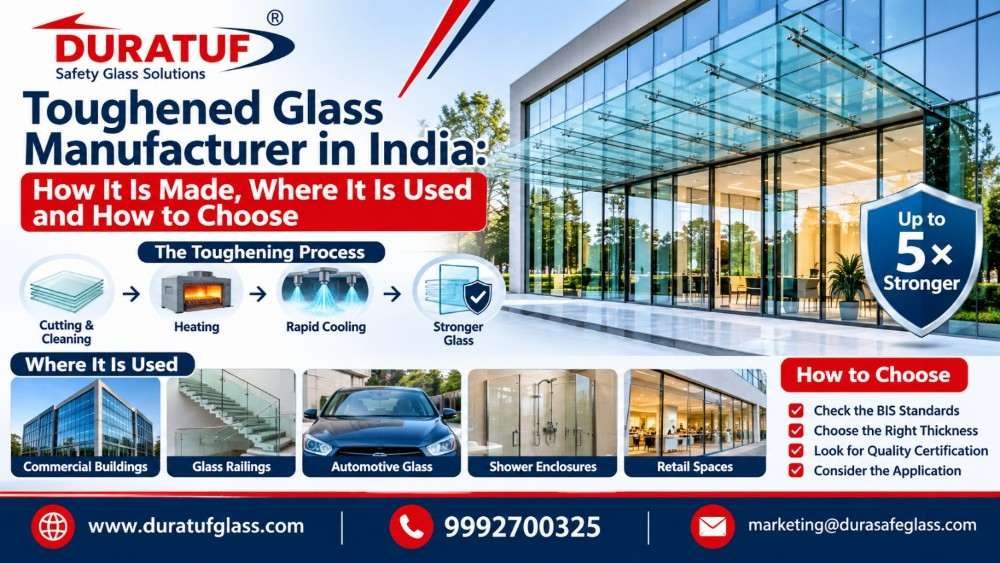
Toughened glass is several times stronger than ordinary glass of the same thickness, and when it breaks it forms small, blunt pieces. If you are searching for a toughened glass manufacturer in India, this guide explains the process, the uses and the points that really matter when you compare suppliers.
Quick Answer: What Is Toughened Glass?
Toughened glass, also called tempered glass, is normal glass that has been heated to a high temperature and then cooled very quickly. This creates compression on the surface and tension inside, which makes the glass much stronger. If it breaks, it crumbles into small granular pieces rather than sharp shards. See the general overview on Wikipedia’s tempered glass page.
How a Toughened Glass Manufacturer in India Makes It
- Cutting and shaping. Glass is cut to size first, because toughened glass cannot be cut afterwards.
- Edge finishing. Edges are ground or polished. Clean edges reduce stress points.
- The surface is cleaned so heat spreads evenly.
- The glass is heated in a furnace close to its softening point.
- Rapid cooling. Controlled air jets cool the surfaces quickly, locking in surface compression.
- Panels are checked for flatness, distortion, size and fragmentation behaviour.
A responsible glass manufacturer keeps the furnace profile, cooling pattern and inspection steps consistent, because small changes can affect strength and optical quality.
Key Benefits of Toughened Glass
- Higher strength: It resists impact and bending far better than ordinary glass.
- Thermal resistance: It handles temperature changes better.
- Safer breakage: Small blunt pieces reduce injury risk.
- Long service life: It performs well under daily use and vibration.
- Wide use: It works for vehicles, buildings and appliances.
Where Toughened Glass Is Used
Vehicles
Side windows and rear windows in buses, trucks and cars often use toughened glass. See side window glass for buses and automotive glass for cars.
Buildings
Doors, partitions, balustrades, shower enclosures and storefronts use toughened glass for safety and strength.
Railways and heavy equipment
Cabin and window glazing for trains and machines needs to withstand vibration and temperature shifts.
Home and industrial products
White goods, cookware lids and display units use toughened glass for heat and impact resistance.
Toughened Glass vs Annealed Glass vs Laminated Glass
| Feature | Annealed Glass | Toughened Glass | Laminated Glass |
| Strength | Standard | About several times higher | Standard to high, based on build |
| Break pattern | Large sharp shards | Small blunt pieces | Cracks but stays attached |
| Can be cut after processing | Yes | No | Limited |
| Heat resistance | Low | Higher | Moderate |
| Best for | General glazing | Doors, side windows, partitions | Windshields, overhead glazing |
For front windshields and overhead use, laminated glass is normally the better choice. For side windows and doors, toughened glass is common.
How to Choose a Toughened Glass Manufacturer in India
- Process control. Ask about furnace type, cooling method and inspection steps.
- Look for compliance with relevant parts of the Indian safety glass standard through the Bureau of Indian Standards. Vehicle glazing also follows rules from MoRTH.
- Size and shape range. Check whether the supplier handles flat, curved and custom shapes.
- Quality checks. Ask how they test fragmentation and check optical distortion.
- Edge and hole work. Cut-outs, holes and polished edges should be done before toughening.
- Delivery reliability. Production lines need steady supply.
Common Mistakes
- Ordering glass and expecting to trim it later. Toughened glass cannot be cut once processed.
- Ignoring edge damage during handling. A chipped edge can lead to unexpected breakage.
- Using toughened glass where laminated glass is required.
- Not stating the correct thickness and tolerance in the order.
Handling and Care Tips
- Store upright with cushioning between sheets.
- Avoid hitting the edges against hard objects.
- Clean with a soft cloth and mild cleaner.
- Make sure the frame allows a small gap for expansion.
Why Duratuf Glass for Toughened Glass
Duratuf Glass has been making safety glass since 1986 and supplies automobile, bus, railway, off-road and architectural segments. Explore the toughened glass range, and see related products like insulating glass and aluminium windows with glass. To share your size and thickness needs, use the contact page.
Frequently Asked Questions (FAQs)
1. What is toughened glass?
It is heat-treated safety glass that is much stronger than normal glass and breaks into small blunt pieces.
2. Is toughened glass the same as tempered glass?
Yes. The two names mean the same product.
3. Can toughened glass be cut?
No. It must be cut, drilled and edged before the toughening process.
4. Is toughened glass safe?
It is considered safety glass because it reduces the risk of sharp injuries when broken.
5. Where is toughened glass commonly used?
In vehicle side windows, doors, partitions, railings, shower areas and appliances.
6. Is toughened glass better than laminated glass?
Neither is better everywhere. Toughened glass suits side windows and doors, while laminated glass suits windshields and overhead glazing.
7. Why does toughened glass sometimes break suddenly?
Usually due to edge damage, impact at the edge or installation stress. Careful handling and proper framing reduce the risk.
8. Can toughened glass handle heat?
It handles temperature change better than ordinary glass, but it is still not made for open flame.
9. Can I get custom shapes?
Yes. Many manufacturers produce flat and curved toughened glass in custom sizes and shapes.
10. How do I order toughened glass from Duratuf Glass?
Share your size, thickness and use case through the contact page.
Final Thoughts
A good toughened glass manufacturer in India gives you consistent strength, clean edges and clear guidance on where to use the glass. Match the glass to the application, ask about process and standards, and plan cuts and holes before ordering. When ready, contact Duratuf Glass.