
Architectural Glass Manufacturer in India: Choosing Glass That Performs for Your Building
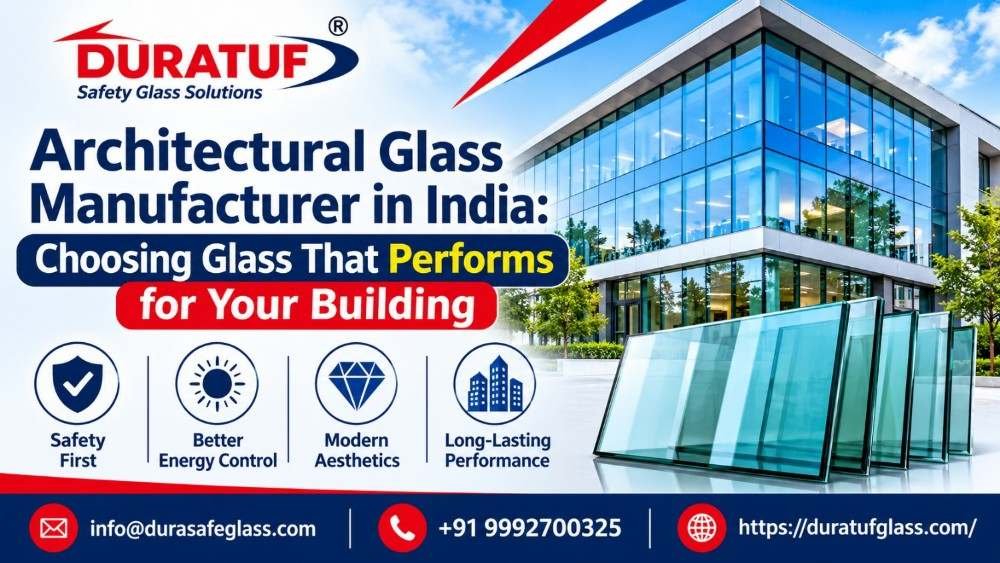
An architectural glass manufacturer in India supplies the glass that shapes how a building looks, feels and performs. That means facades, windows, doors, partitions, balustrades and skylights, each with its own safety, light and energy needs. The best choice balances strength, comfort and appearance for your climate, instead of simply picking the thickest pane.
What does an architectural glass manufacturer in India supply?
- Toughened glass for doors, partitions and balustrades.
- Laminated glass for overhead glazing and safety-critical areas.
- Insulating glass units for windows and facades that need thermal and acoustic control.
- Aluminium windows with glass supplied as complete systems.
- Special glass such as bullet-resistant glass for secure buildings.
Which glass for which building element?
| Building element | Recommended glass | Key benefit |
| Windows | Insulating glass unit | Heat and noise reduction |
| Internal partitions | Toughened | Safe, clean look |
| Balustrades | Toughened laminated | Fall protection, safe breakage |
| Skylights | Laminated | Stays in place if cracked |
| Facades | Insulating, often low-E coated | Daylight with solar control |
| Secure rooms | Bullet-resistant | Ballistic protection |
Performance terms in plain English
- U-value. How much heat passes through the glass. Lower is better for insulation.
- Solar heat gain. How much sun-driven heat enters. In hot regions, lower gain keeps rooms cooler.
- Visible light transmission. How much daylight comes through.
- Acoustic rating. How well the glass blocks outside noise.
Low-emissivity coatings help control heat flow, and the Low-E glass page on Wikipedia gives a clear introduction.
Why climate matters in India
A sunlit west-facing facade in north India faces very different heat from a shaded coastal building. Ask your architectural glass manufacturer in India to recommend glass for your orientation, not just a standard product. Insulating glass can cut heat gain and noise, which also supports lower cooling use. For rules and benchmarks, the Bureau of Energy Efficiency publishes energy guidance, and the Indian Green Building Council sets green rating criteria.
Safety first: choosing the right type
Any glass within reach of people, or above them, needs careful selection. Toughened glass suits doors and partitions. Laminated glass suits overhead and ground-floor frontages because cracked pieces stay bonded. For safety glazing standards, check the Bureau of Indian Standards.
How to choose an architectural glass manufacturer in India
- Share full drawings early. Sizes, openings and fixings decide what is possible.
- Ask about processing capacity. Large panels need the right furnaces, handling and packing.
- Request test and quality records. Batch traceability and inspection reports matter.
- Check frame coordination. A supplier offering glass and aluminium windows with glass reduces interface problems.
- Look at similar projects. References from comparable work reduce risk.
- Confirm technical support. You want clear answers before and after delivery.
Why Duratuf Glass
Since 1986, Duratuf Glass has served builders, bus makers, railways and appliance brands. The team’s experience with demanding safety glass for vehicles carries over to building projects. Read more about the company or browse the solutions page to see the range.
For an overview of European glass industry insight, the Glass for Europe site is a useful external reference.
Frequently asked questions
- What does an architectural glass manufacturer in India do?
It processes and supplies safety, insulating and specialist glass for facades, windows, doors, partitions and other building elements.
- Which glass is best for windows in hot climates?
Insulating units with solar-control or low-E coatings help reduce heat gain while keeping daylight.
- Is toughened glass safe for balustrades?
Toughened glass is a common base, but balustrades usually use toughened laminated glass so that panes hold together if one breaks.
- What is the difference between laminated and insulating glass?
Laminated glass bonds panes with an interlayer for safety. Insulating glass separates panes with a sealed gap for thermal and acoustic performance.
- Can glass reduce noise in buildings?
Yes. Laminated and insulating glass with different pane thicknesses can lower outside noise.
- Do I need heat soak testing for facade glass?
It is often recommended for toughened facade glass because it reduces the risk of delayed breakage.
- Can I get aluminium windows and glass from one supplier?
Yes. Duratuf Glass supplies aluminium windows with glass, which simplifies coordination.
- How does glass affect green building ratings?
Glass performance influences daylight, heat gain and energy use, which all feature in green rating systems.
- What information do I need to enquire?
Provide drawings, sizes, glass type, quantity, location and any performance targets.
- How do I reach Duratuf Glass?
Use the contact page to share your requirement.
Next step
Send your architectural drawings and performance goals so the team can suggest suitable glass options.