Automotive Glass Manufacturers in India: Types of Glass and Safety Standards
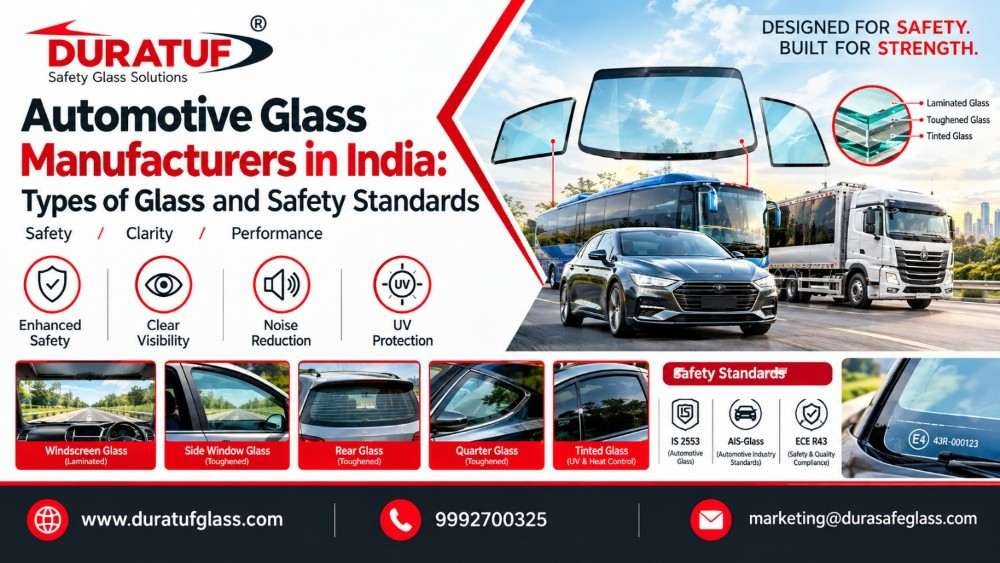
Quick answer: Automotive glass manufacturers in India make windscreens from laminated glass and side and rear windows from toughened glass. Each type is designed to protect people in a crash, so buyers should check the glass type, standards and fit before ordering.
Vehicle glass does far more than let you see outside. It supports the body, keeps out wind and rain, and protects people if something goes wrong. That is why automotive glass manufacturers in India work to strict safety rules. Here is how the main glass types differ and what to consider when you buy.
The main glass types in a vehicle
| Position | Usual glass | Why |
| Windscreen | Laminated | Stays in place when cracked, keeps the driver’s view |
| Side windows | Toughened | Breaks into small blunt pieces |
| Rear window | Toughened | Allows heating elements and quick clearing |
| Sunroof | Toughened or laminated | Depends on design and use |
| Bus windows | Toughened, often with frames | Strength and ease of replacement |
Windscreens: laminated for safety
Windscreens are made from two glass layers with an interlayer. If a stone hits, the glass may crack, but it will not shatter into the cabin. Our laminated windshield for buses and automotive glass for cars pages show examples. For background, see this overview of the windshield.
Side and rear glass: toughened for strength
Toughened glass is heat-treated, so it is stronger than ordinary glass and breaks into small pieces. Buses use side window glass for buses built to handle long hours on rough roads.
Frames and fitting
Vehicle glass often works with frames and seals. Our aluminium window frame for buses is designed to hold glass securely and make replacement easier. A good fit reduces leaks, wind noise and vibration.
Standards and regulation
Vehicle glass in India is shaped by rules from the Ministry of Road Transport and Highways, and testing is carried out by organisations such as ARAI. The wider automotive industry is represented by SIAM, and international glazing requirements are published by UNECE. When you talk to automotive glass manufacturers in India, ask which rules their glass follows.
What buyers should check
- Glass type matches the position in the vehicle.
- Thickness and shape match the template or drawing.
- Markings on the glass show it is safety glass.
- Optical quality, meaning no distortion when you look through it.
- Edge finish and sealing.
- Packing for safe transport.
Common problems and their causes
| Problem | Likely cause | Prevention |
| Wind noise | Poor fit or worn seal | Correct template and quality frames |
| Water leaks | Faulty sealing | Proper installation |
| Distortion | Poor glass quality | Choose reputable suppliers |
| Early cracking | Stress at the edge or frame | Correct fitting and handling |
Why experience matters
Automotive glass manufacturers in India serve many vehicle types, from city buses to cars and trains. The better ones understand vibration, heat and long working hours. Duratuf Glass has worked with the bus, car, railway and off-road sectors since 1986, so its team is used to a range of conditions.
Next step
If you want to check a specification, share the details via the contact page. You can also look through the solutions page for more vehicle glass options.
Frequently asked questions
- What do automotive glass manufacturers in India produce?
Windscreens, side windows, rear windows and related safety glass for cars, buses, trucks and other vehicles. - Why is the windscreen laminated?
Laminated glass holds together on impact, which protects occupants and keeps the driver’s view. - Why are side windows toughened?
Toughened glass is strong and breaks into small, blunt pieces, which lowers the risk of serious cuts. - Can laminated glass be used for side windows?
Sometimes, for added security or noise reduction, but toughened glass is more common. - What does a safety mark on vehicle glass mean?
It shows the glass has been made and tested to a safety standard. Always check the marking. - Do buses use special glass?
Yes. Buses need strong, durable glass and frames made for long daily use. - Can I order glass for older vehicles?
Often yes, if you provide a template or the original glass. Confirm with the supplier first. - How do I avoid wind noise and leaks?
Use accurate glass, good seals and correct installation. - What is OEM glass?
Glass made to the specifications that a vehicle maker uses on its production line. - How can I contact automotive glass manufacturers in India for a requirement?
Use the contact page and share the vehicle model, glass type and quantity.